
Basic Life Support (BLS) Training
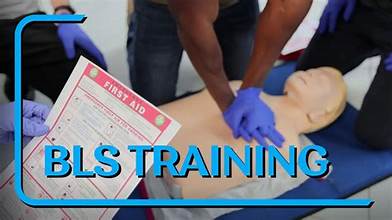
Basic Life Support & CPR Training for Health and Social Care Professionals
Course Duration: 3–4 Hours
Delivery: Classroom | On-site Workplace Training
Certificate Validity: 1 Year (Annual Refresher Recommended)
Course Fee:
- Individual Booking: £55 per learner
- Group Booking (up to 12 learners): From £450
- Bespoke corporate training available upon request.
Save Lives with Confidence
Every second counts during a medical emergency. Basic Life Support (BLS) equips healthcare professionals with the essential knowledge and practical skills to recognise life-threatening emergencies, respond quickly and provide effective care until emergency services arrive.
At Vertex Learning Hub, our Basic Life Support training is designed specifically for health and social care professionals, ensuring learners can respond confidently to cardiac arrest, choking, unconsciousness and other emergency situations.
The course combines the latest resuscitation guidance with realistic practical scenarios, giving learners the confidence to act when it matters most.
Course Overview
This practical course provides learners with the skills required to assess emergency situations safely, perform cardiopulmonary resuscitation (CPR), use an Automated External Defibrillator (AED), manage choking incidents and place casualties into the recovery position.
Training is delivered by experienced healthcare professionals using realistic simulation equipment.
Learning Outcomes
By the end of this course learners will be able to:
- Understand the principles of Basic Life Support
- Assess emergency situations safely
- Recognise signs of cardiac arrest
- Perform adult CPR correctly
- Use an Automated External Defibrillator (AED)
- Manage choking in adults
- Place an unconscious breathing casualty into the recovery position
- Communicate effectively with emergency services
- Apply infection prevention measures during resuscitation
- Work effectively as part of an emergency response team
Course Curriculum
Module 1 – Introduction to Basic Life Support
- What is Basic Life Support?
- Chain of Survival
- Importance of early intervention
- Roles and responsibilities
Module 2 – Scene Safety
Learners will cover:
- Dynamic risk assessment
- Protecting yourself and others
- Identifying hazards
- Personal protective equipment (PPE)
Module 3 – Primary Assessment
Using the DRSABC approach:
- Danger
- Response
- Shout for Help
- Airway
- Breathing
- Circulation
Module 4 – Adult CPR
Practical instruction covering:
- Chest compressions
- Rescue breaths
- Compression depth
- Compression rate
- Correct hand positioning
- High-quality CPR techniques
- Team CPR
Hands-on practice is completed using CPR manikins.
Module 5 – Automated External Defibrillator (AED)
Learners will practise:
- Safe AED operation
- Pad placement
- Following voice prompts
- Safety precautions
- Combining CPR with AED use
Module 6 – Recovery Position
Participants will learn:
- When to use the recovery position
- Safe positioning techniques
- Airway management
- Ongoing monitoring
Module 7 – Choking
Recognising and managing:
- Mild airway obstruction
- Severe airway obstruction
- Back blows
- Abdominal thrusts
- Post-incident care
Module 8 – Medical Emergencies
Overview of responding to:
- Cardiac arrest
- Seizures
- Diabetic emergencies
- Stroke
- Heart attack
- Unconscious casualty
- Breathing difficulties
Module 9 – Infection Prevention During Resuscitation
Including:
- Standard precautions
- Barrier devices
- Hand hygiene
- Safe disposal of equipment
Module 10 – Practical Scenarios
Learners will participate in realistic emergency scenarios involving:
- Adult collapse
- CPR
- AED use
- Choking
- Recovery position
- Team communication
Who Should Attend?
This course is ideal for:
- Healthcare Assistants
- Support Workers
- Registered Nurses
- Care Home Staff
- Domiciliary Care Workers
- Senior Carers
- Mental Health Support Workers
- Learning Disability Support Staff
- Residential Care Workers
- Community Care Teams
- Personal Assistants
- Hospice Staff
- Dental Teams
- GP Practice Staff
- Anyone working in health and social care
Entry Requirements
There are no formal entry requirements.
This course is suitable for both new and experienced healthcare professionals.
Assessment
Learners will complete:
- Continuous practical assessment
- CPR skills assessment
- AED practical demonstration
- Trainer observation
- Question and answer sessions
There is no formal written examination.
Certification
Upon successful completion, learners will receive a Vertex Learning Hub Basic Life Support Certificate.
Annual refresher training is recommended to ensure skills remain current and workplace compliant.
Why Train with Vertex Learning Hub?
Vertex Learning Hub provides practical, engaging and evidence-based training delivered by experienced healthcare professionals.
Our training offers:
- Hands-on practical learning
- Modern CPR manikins and AED trainers
- Small class sizes
- Experienced instructors
- Interactive scenarios
- Employer-focused training
- Flexible delivery options
- Competitive group rates
Benefits of Basic Life Support Training
Completing this course helps learners to:
- Respond quickly during emergencies
- Improve patient outcomes
- Build confidence in emergency situations
- Support safer healthcare environments
- Meet employer training requirements
- Strengthen teamwork during medical emergencies
- Maintain professional competence
Delivery Options
Classroom Training
Join one of our scheduled training sessions at Vertex Learning Hub.
Workplace Training
We deliver on-site Basic Life Support training for healthcare providers, care homes, supported living services, GP surgeries and community organisations.
Bespoke Group Training
Tailored programmes designed around your organisation’s operational needs.
